
This is a public service article. I’m sure that all experienced perfumistas (meaning “my regular readers”) know all that and then some. But I decided to put together in one post information I wish I had when I started sharing my perfumes with others (not that long ago). So for most of my readers it’s a post with pictures of Rusty helping me to illustrate my points.
If you plan decanting as a business there will be completely different rules, this post probably won’t help you.
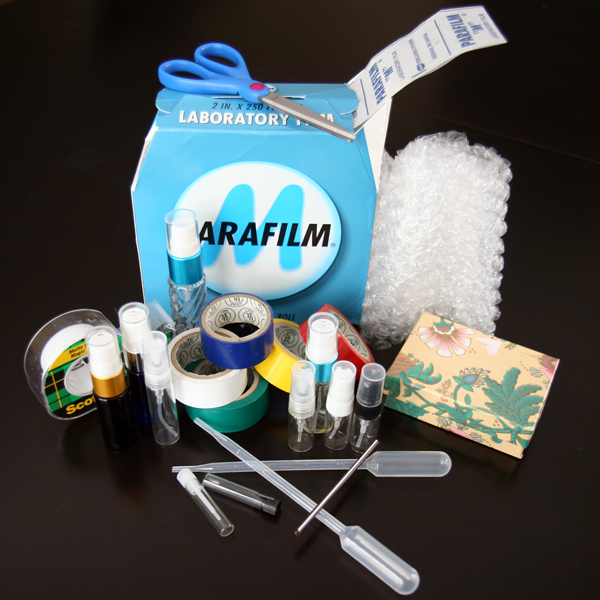
Decanting Supplies
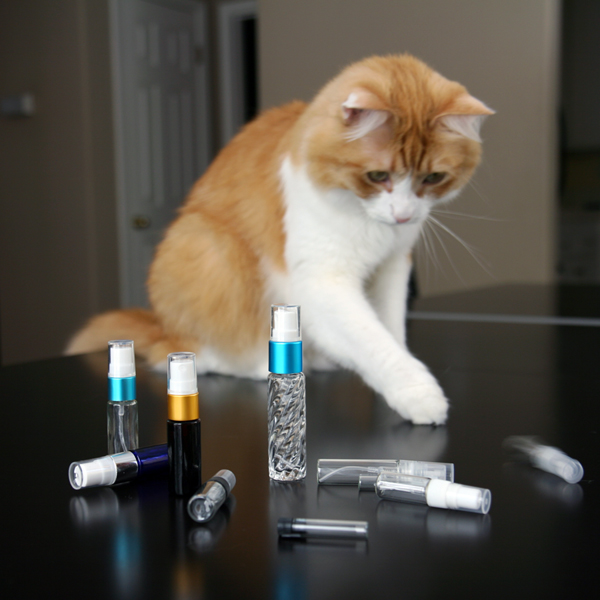
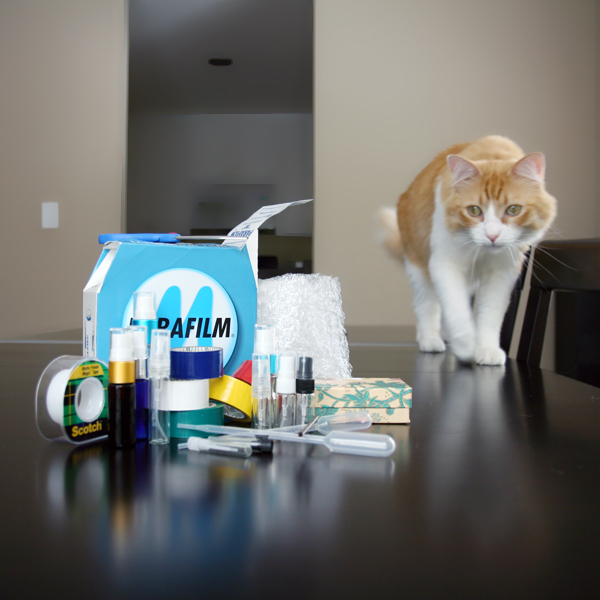
You might find useful to get 1-2 ml dab vials (for sharing your small samples, extraits or perfumes of which you do not have enough); 3-4 ml sprays for samples; 5 ml and 10 ml sprays for bigger decants. Pipettes might be useful if you plan to decant a splash bottle into many decants. Otherwise just get some straws from a coffee shop: it’s less convenient but it will do the job.
I know that some perfumistas prefer plastic bottles: they are cheaper and are safer to ship but if I have a choice I won’t go for a plastic bottle. I don’t know that for a fact but I’m afraid that plastic will dissolve a little and contaminate my sample.

There are many places to buy bottles for decants. They vary by selection, prices and minimum order size.
Best Bottles: has better prices but require minimum $50 order (plus shipping; please note that shipping to a commercial address is cheaper).
Accessories for Fragrances: almost twice as expensive as those from Best Bottles but they allow smaller orders.
1 ml, 3 ml (with screw-on spray pump) and 10 ml are good at both sites, 5 ml decants, in my opinion, are nicer from Accessories for Fragrances.
If you have other favorite places for decanting supplies (and especially in Europe) – please share.
Labeling
Labels are important. You do not think about them when they are alright but when they go wrong it might be devastating. Read Steve’s (The Scented Hound) story – though it’s a lot of fun to do a detective work guessing which perfume you’re testing, in general it’s better to avoid those situations.
There are many ways of making labels – from the simplest hand-written labels supplied with decanting vials, through printed on a printer (I saw some fancy ones with brand fonts/logos reproductions) all the way to those printed on label makers (functionality of some of those is just a mind-boggling).
If you do paper labels, it’s a good practice to put a transparent tape over it to prevent smudging during the shipping leakage or further use.

I use a simple label maker similar to this one but I’m too lazy to learn how to do more styles (I got it used without documentation) so I just chose the font size and stopped there.
Preventing leakage
There is an assumption you should make: if a package with your decants flies it will leak. There are a couple of things you can do to prevent/minimize that.
After you make sure that a vial/atomizer is closed as well as it can be you’ll need a tape. Many perfumistas are using an electrical tape and it works just great. Vanessa (Bonkers about Perfume) wrote the Ode to it: The Unsung Hero Of The Swap Scene – Electrical Insulation Tape.
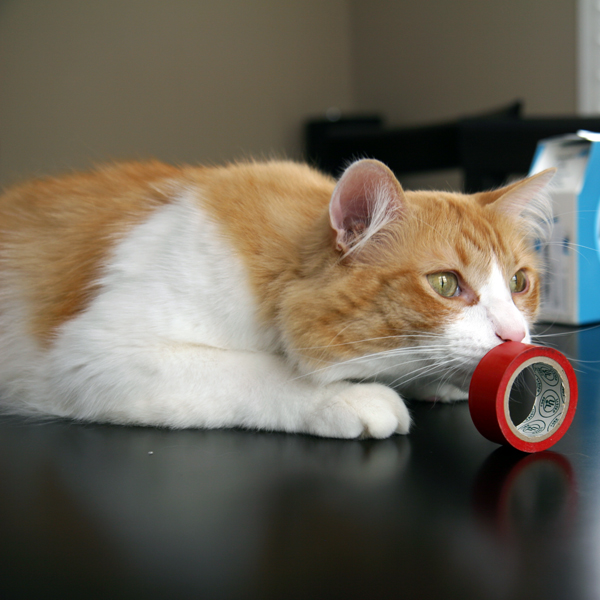
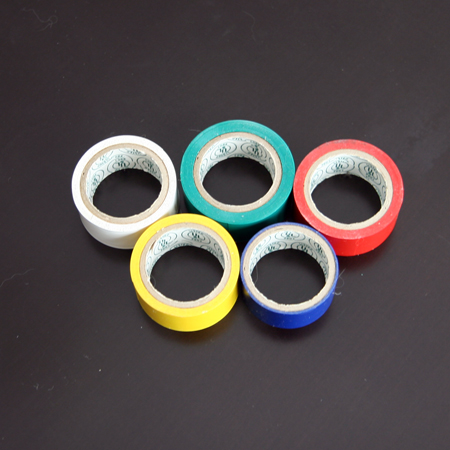
But black color bothered me so I found an alternative and for a long time I was using colored vinyl tape. The only bad thing about those tapes is that when a perfume leaks a little and you do not take the tape off after it arrives the tape might leave some sticky residue on the bottle.
Recently, thanks to Ruth Kaminski from Facebook Fragrance Friends Group, I’ve discovered an even better solution – a parafilm. If you’re not in a hurry, you can watch for the price drop (I bought it for ~$18). I suspect that package will serve me for years: all it takes is a really small piece of parafilm per a decant. You just cut it, peel a protecting paper, stretch it warming in your fingers and wrap around a vial. No leakage, no sticky residue. I plan to use it also for some of my samples/decants that I’m not using up too quickly to prevent evaporation.
No matter what you use, just make sure you’re wrapping it around the place where plastic part connects with glass. If you wrap it around the place where a covering cap ends you will reduce leakage into the package but it won’t prevent a perfume from leaking into that cap and evaporating.
Packing and Shipping
Bubble wrap is your friend. Just make sure you are not trying to re-use the one that has been popped or lost air. Do not wrap too tight. Think about it this way: this wrap will protect only if with a pressure applied a bubble bursts before the conducted pressure squashes the vial.
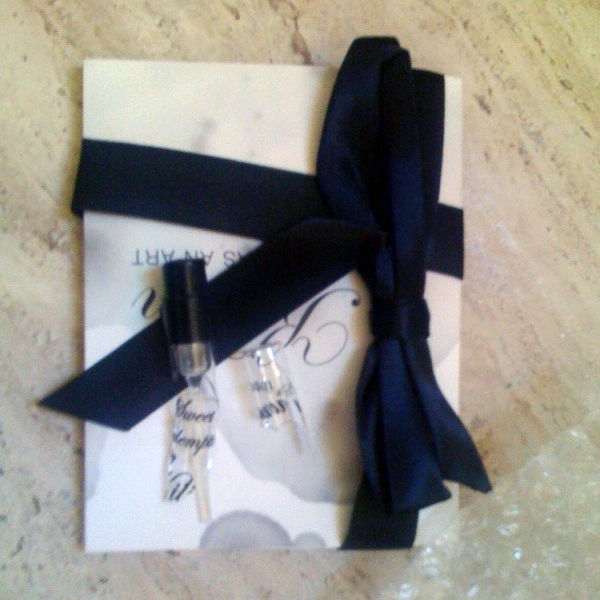
Vanessa wrote a post about bubble wrap as well: Another Unsung Hero Of The Swap Scene – Bubble Wrap.
For sending decants in/from the U.S. there are several options: bubble mailer envelope, small box (you have to have your own) shipped First Class Mail (you have to specifically ask for it, many post office clerks try to upsell) or Priority Mail® Small Flat Rate Box (box provided). Padded envelopes are cheaper in bulk from stores/online, not from a Post Office. You can also re-use those that have been sent to you. Sometimes I use small boxes from jewelry or from cosmetics inside a padded envelope to make it sturdier. Small box for priority mail are free and if you print your labels online it’ll be cheaper and will include delivery confirmation without extra charge. 
Other Considerations
Summer is really not the best time to be sending any perfumes: think about storage rooms and mail trucks. Somehow I do not think they have a climate control. If you have to send it in summer try doing it on Monday or Tuesday so that it doesn’t spend a weekend at the storage facility.
Have I forgot anything? Please share in the comments.
Happy decanting!
Images: my own.
 Undina's Looking Glass